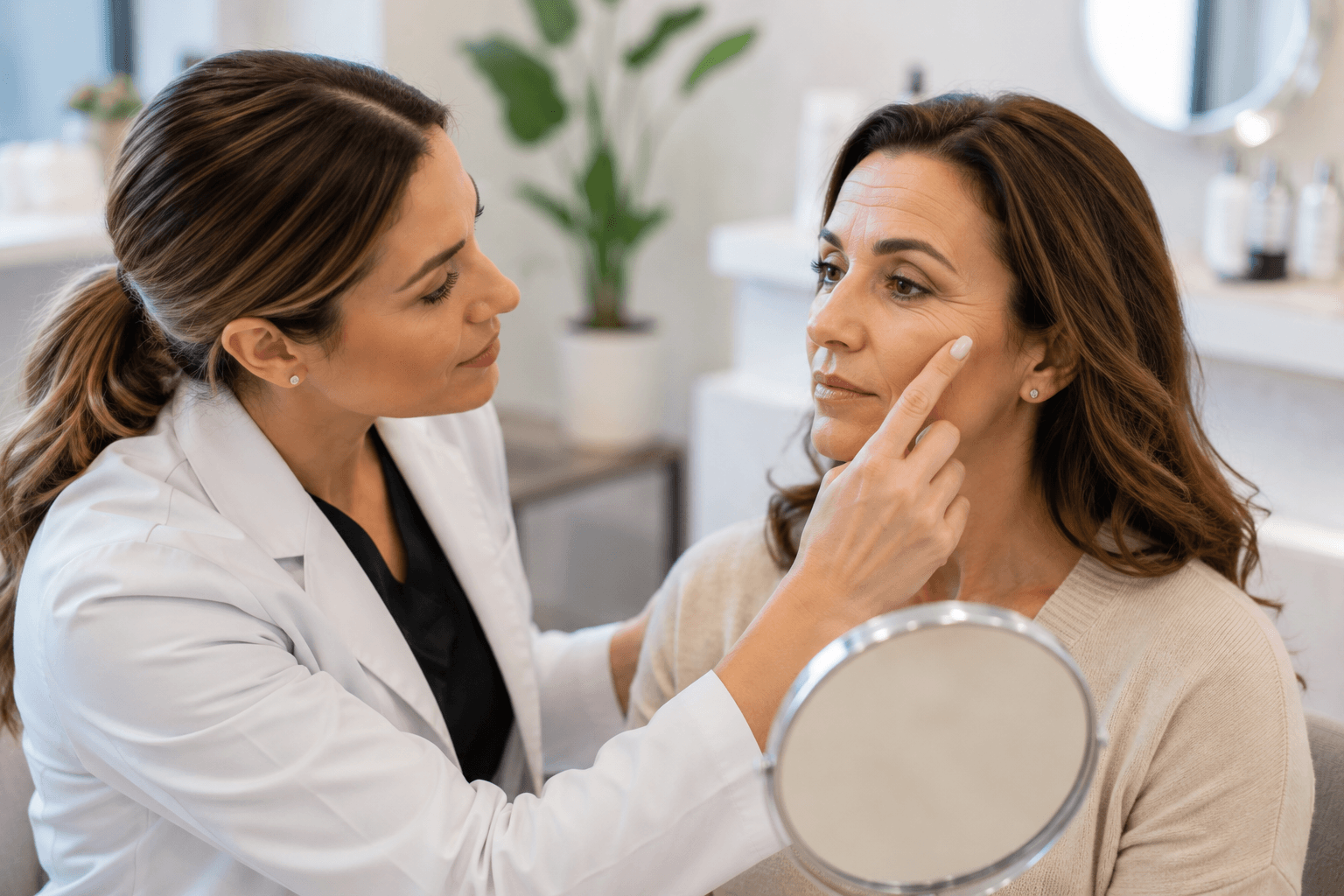
There is a particular moment a lot of people experience somewhere in their thirties or forties, catching their reflection mid-laugh or mid-frown and noticing lines that used to disappear the second their face relaxed, but now linger. It is not your imagination, and it is not something you are doing wrong. It is simply how skin and repeated muscle movement interact over time.
This article looks at why expression lines form, what actually happens beneath the skin as we age, and how Botox has become one of the most well understood and widely used treatments for softening these lines without changing how your face naturally moves.
What Causes Expression Lines to Form?
Every time you smile, squint, frown, or raise your eyebrows, the muscles beneath your skin contract. In your twenties, skin has enough collagen and elasticity to bounce back completely once the muscle relaxes. Over time, repeated contraction combined with a gradual decline in collagen production means the skin does not fully smooth back out. The result is a crease that starts as a dynamic line, meaning it only shows up during movement, and eventually becomes a static line, visible even when your face is at rest.
The areas most prone to this are the forehead, the space between the eyebrows often called the elevens, and the outer corners of the eyes commonly known as crow's feet. These areas involve some of the most frequently used facial muscles, which is exactly why lines tend to show up there first.
What Other Factors Speed Up the Process?
Genetics plays a role in how early and how deeply these lines develop, since skin thickness and collagen density vary from person to person. Sun exposure is another major factor, since UV rays break down collagen and elastin more quickly than time alone. Georgia's warm, sunny climate makes sun protection an especially relevant part of any conversation about skin aging for people living in and around Monroe. Smoking, dehydration, and even sleeping position can also contribute to how quickly expression lines deepen over the years.
Are Expression Lines Just a Cosmetic Concern?
For most people, yes. Expression lines do not pose a health risk. But they are often one of the first visible signs of aging that people notice, and for many patients, addressing them is less about chasing a certain look and more about feeling like their reflection matches how they feel inside. There is nothing wrong with wanting that, and it is one of the most common reasons patients come in for a consultation in the first place.
How Does Botox Actually Work on Expression Lines?
Botox is a purified form of botulinum toxin that works by temporarily blocking the nerve signals that tell specific facial muscles to contract. When a muscle cannot contract as forcefully, the skin above it stays smoother, since the repeated folding motion that creates and deepens lines is significantly reduced. This is why Botox is particularly effective on dynamic lines, those caused by movement, especially in the upper third of the face.
It is worth noting that Botox does not add volume or fill in lines the way a dermal filler does. Instead, it works by relaxing the underlying muscle activity that causes the line to form in the first place, which is why it is most effective for expression related wrinkles rather than lines caused by volume loss.
How Long Does a Botox Appointment Take?
A typical treatment session takes about fifteen to twenty minutes, which is part of why it has become such a popular option for people with busy schedules. There is no downtime required, so most patients return directly to their day immediately afterward.
When Do Botox Results Appear?
Most patients begin noticing results within three to five days, with full effects visible around the two week mark. Results generally last three to four months, though this can vary based on individual metabolism and the specific area treated.
Who Is a Good Candidate for Botox?
Botox tends to work best for adults who are starting to notice dynamic lines from repeated expressions, particularly in the forehead, between the brows, or around the eyes. It is also commonly used preventatively by younger patients who want to slow the formation of deeper lines before they become static. A thorough consultation is the best way to determine whether Botox, a filler, or a combination approach fits your specific concerns and goals.
How Is Botox Different From Dermal Fillers?
This is one of the most common questions we hear, and the distinction matters. Botox addresses lines caused by muscle movement, while dermal fillers restore volume that has been lost over time, such as in the cheeks, under the eyes, or around the mouth. Many patients benefit from a combination of both, using Botox for the upper face and fillers for areas where volume loss is the primary concern. Your provider can walk you through which approach, or combination, best matches what you are seeing in the mirror.
What Should You Expect During Recovery?
Recovery from Botox is minimal to nonexistent for most patients. Mild redness or small bumps at the injection sites typically resolve within a few hours. Patients are generally advised to avoid rubbing the treated area and to skip intense exercise for the remainder of the day, but there are no significant restrictions beyond that.
Why Choose a Dermatology Provider for Botox in Monroe?
Because Botox involves precise knowledge of facial anatomy and muscle function, having it administered by an experienced medical provider matters more than people sometimes realize. Overtreatment or imprecise injection technique can lead to an unnatural or frozen appearance, while an experienced injector can achieve subtle, natural looking results that soften lines without erasing expression entirely.
Our Monroe area patients can learn more about our Botox services, explore our full services page, and request an appointment directly with our team when you are ready to talk through your options.
Frequently Asked Questions About Botox
Does Botox hurt? Most patients describe the sensation as a quick pinch. A very fine needle is used, and the process is generally well tolerated without any need for numbing.
How often do I need to get Botox to maintain results? Most patients return for maintenance treatments every three to four months, though this can vary depending on how quickly your body metabolizes the treatment and how deep your expression lines are.
Will Botox make my face look frozen? When administered by an experienced provider at an appropriate dose, Botox should soften lines while preserving natural facial movement and expression, not eliminate it entirely.
Can Botox be used for anything besides wrinkles? Yes, Botox is also commonly used for concerns like excessive sweating and certain muscle related conditions, though this article focuses specifically on its cosmetic use for expression lines.
Is there an ideal age to start Botox? There is no single correct age. Some patients start in their late twenties as a preventative measure, while others begin later once static lines have already formed. A consultation can help determine the right timing for your specific skin.
This guide was updated in August 2026 to reflect current Botox treatment guidance. If expression lines have been bothering you, reach out to our Monroe team to schedule a consultation and talk through your options.

.svg)
.svg)