Walk into almost any conversation about anti aging treatment and the word injectable comes up within the first minute, usually followed by some confusion about what actually separates one option from another. Botox and filler get lumped together constantly, even though they solve completely different problems.
If you have ever stood in front of a mirror unsure whether your forehead lines or your flattened cheeks are the bigger issue, this article is for you. We will break down what each concern actually looks like, what causes it, and how cosmetic injectables at DermGA are matched to the specific problem rather than applied as a blanket solution for anyone who mentions the word aging.
What Are the Two Main Signs of Facial Aging?
Facial aging generally falls into two categories, and understanding the difference is the fastest way to figure out which type of injectable actually addresses your concern.
What Causes Dynamic Wrinkles From Facial Movement?
Dynamic wrinkles form from repeated muscle movement over years, things like squinting, frowning, or raising your eyebrows. Over time, the constant folding of skin along these movement lines creates creases that eventually become visible even when your face is at rest. Forehead lines, frown lines between the brows, and crow's feet around the eyes are the most common examples.
What Causes Static Wrinkles and Volume Loss?
Static wrinkles and hollowing happen for a different reason entirely. As collagen production slows and facial fat pads shift and shrink with age, the face loses structural support. This shows up as flattened cheeks, deepening folds near the nose and mouth, and skin that appears looser or less supported than it used to.
How Do I Know Which Type of Aging I Am Dealing With?
A simple way to think about it is this. If a line disappears when your face is completely relaxed, it is likely a dynamic wrinkle caused by movement. If a line or hollow area is present even when your face is at rest, volume loss or structural changes are likely playing a bigger role. Most patients actually have some combination of both, which is exactly why a personalized consultation matters more than picking a treatment off a menu.
How Do Neuromodulators Like Botox Address Movement Related Lines?
Neuromodulators work by temporarily relaxing the targeted muscle, which reduces the repetitive folding that creates dynamic wrinkles.
What Areas Are Commonly Treated With Botox?
The most frequently treated areas include the forehead, the frown lines between the eyebrows known as the glabella, and crow's feet at the outer corners of the eyes. Some patients also use it for a condition sometimes called tech neck, where repeated downward head positioning while looking at phones contributes to visible neck banding. You can learn more about our approach on the Botox Cosmetic service page.
How Long Do Results From Botox Typically Last?
Results generally last three to four months before the treated muscle gradually regains its normal movement, which is why most patients settle into a consistent treatment schedule a few times a year.
How Do Dermal Fillers Address Volume Loss?
Fillers work through an entirely different mechanism, physically restoring lost volume and support rather than relaxing muscle movement.
What Areas Are Commonly Treated With Filler?
Filler is commonly used in the cheeks, under-eye hollows, nasolabial folds, marionette lines, lips, and jawline. Because these areas all age differently, the specific product and injection technique vary significantly from patient to patient. Our facial fillers page has more detail on the treatment areas we address.
How Long Do Results From Filler Typically Last?
Depending on the product and treatment area, filler results generally last between six months and two years, with high movement areas like the lips typically requiring more frequent touch ups than lower movement areas like the cheeks.
Can Botox and Filler Be Used Together?
Yes, and for many patients this combined approach delivers the most natural, balanced results. Someone dealing with both forehead lines and flattened cheeks, for example, may benefit from a neuromodulator to soften movement related lines alongside filler to restore volume where it has been lost. Rather than choosing one over the other, an experienced provider evaluates your face as a whole and builds a plan that addresses each concern with the tool actually designed for it.
What Should You Expect From a Cosmetic Injectable Consultation?
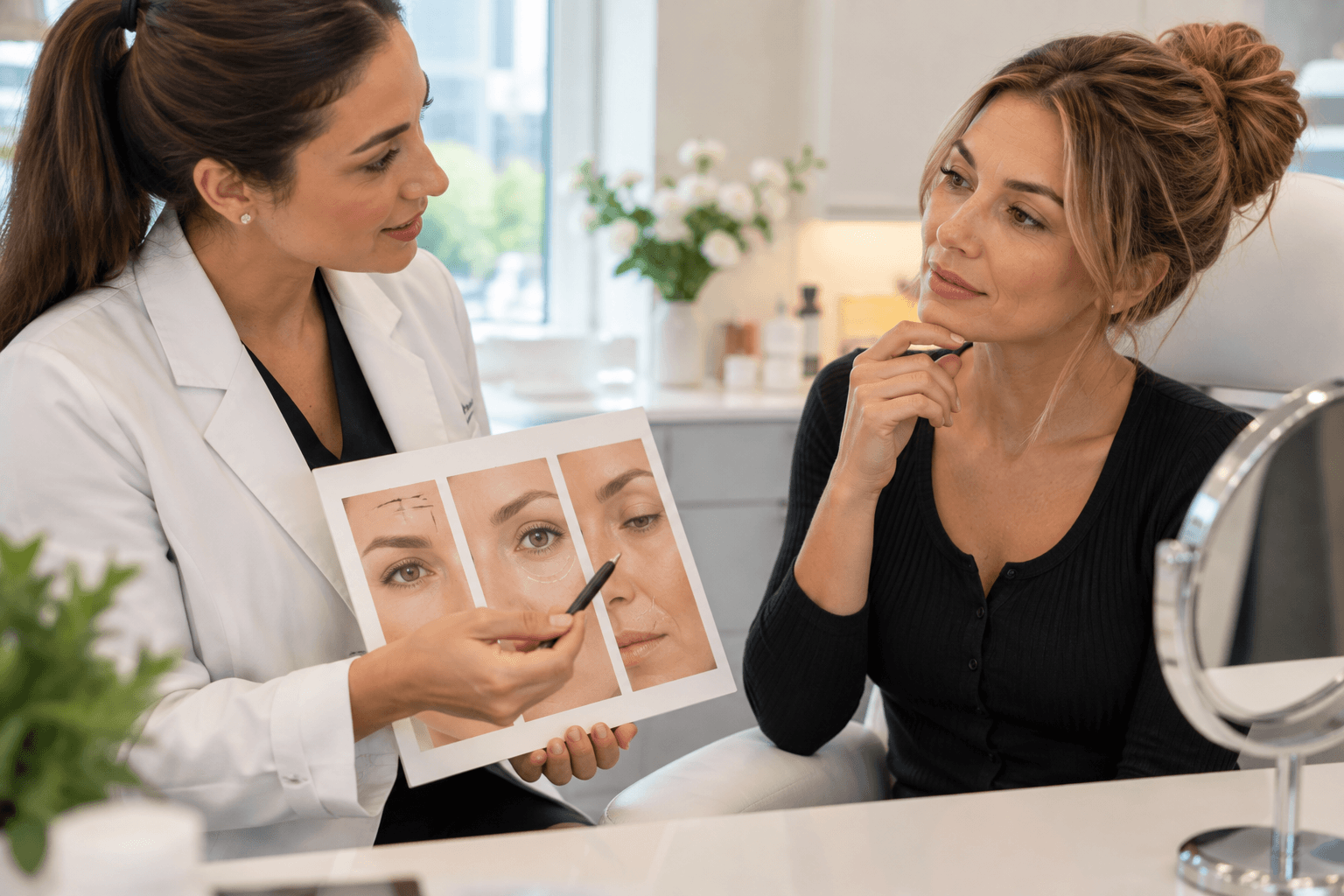
A thoughtful consultation starts with a conversation about what specifically bothers you, followed by a hands on evaluation of your skin and facial structure. From there, your provider should be able to explain clearly which concerns are movement related, which are structural, and how a combined or single treatment approach would address each one. If a provider cannot explain that distinction to you, that is worth noting.
Is There Downtime After Cosmetic Injectables?
Both Botox and filler are considered minimally invasive with little to no real downtime. Mild swelling, redness, or bruising at injection sites is common for a day or two, and our after care page has guidance to help you heal quickly and get the most out of your results.
Who Is a Good Candidate for Cosmetic Injectables?
Most healthy adults bothered by either movement related lines, volume loss, or both are reasonable candidates for cosmetic injectables. The right starting point is always an in person consultation rather than deciding on a specific product before a provider has actually evaluated your face, since the same concern can sometimes be caused by different underlying issues in different patients.
To get a personalized recommendation rather than a guess, browse our full services or head to appointment request to schedule a visit with our Buckhead area team.
Frequently Asked Questions
Is Botox or filler more painful? Both are generally well tolerated, with most patients describing brief pinching or pressure rather than significant pain. Numbing options are available for more sensitive areas.
Can I get Botox and filler on the same day? Yes, many patients receive both treatments during a single visit when it makes sense for their specific concerns.
Do cosmetic injectables look obvious? When performed conservatively by an experienced provider, results should look refreshed and natural rather than overdone.
How soon will I see results? Filler results are often visible immediately, though final settling can take one to two weeks. Botox typically takes three to seven days to take full effect.
How often will I need treatment to maintain results? Most patients return every three to four months for neuromodulator treatment and every six months to two years for filler, depending on the area and product used.
Injectables, Decoded and Demystified
The Botox versus filler debate is not really a debate once you understand that they solve two entirely different problems. Movement lines and volume loss both age the face, just through different mechanisms, and the right cosmetic injectable plan treats each one with the tool actually built for the job. Our Buckhead area team is glad to walk you through exactly what your face needs during a personalized consultation. This guide reflects our current injectable offerings as of August 2026.

.svg)
.svg)