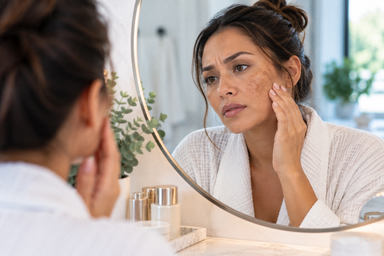
You've tried the serums. You've tried the vitamin C. Maybe you've even tried the TikTok "hack" a friend swore by. And yet that patch of discoloration on your cheek, the faint shadow above your lip, or the freckling that seems to spread every summer is still staring back at you in the mirror. If you live in Decatur, Georgia, you're not imagining it, and you're definitely not alone.
Georgia's long, sun-heavy seasons make dark spots one of the most common skin concerns patients bring up at Derm Associates of Georgia. But not all discoloration is the same, and not every dark spot needs the same solution. Some fade with consistent sunscreen and patience. Others are stubborn enough that no over-the-counter cream will touch them. Understanding the difference is the first step toward actually fixing the problem instead of just covering it up.
This guide walks through what causes dark spots, how to tell different types apart, what actually helps prevent them in a climate like ours, and when it's time to stop guessing and see a professional.
What Causes Dark Spots on the Skin?
Dark spots, also called hyperpigmentation, happen when certain areas of skin produce more melanin than the surrounding tissue. This overproduction can be triggered by sun exposure, inflammation, hormones, or simple aging, and often it's a combination of more than one.
Sun exposure is the biggest driver, especially in a place like Decatur where UV index stays high for much of the year. Ultraviolet light stimulates melanin-producing cells as a defense mechanism, and repeated exposure over years leads to sunspots (also called solar lentigines) on the face, chest, hands, and shoulders. Post-inflammatory hyperpigmentation is another common culprit, showing up after acne breakouts, cuts, insect bites, or any skin injury that triggers inflammation. Then there's melasma, a hormonally driven form of pigmentation often linked to pregnancy, birth control, or thyroid changes, which tends to appear as symmetrical patches on the cheeks, forehead, and upper lip. Finally, plain aging plays a role, since skin's natural turnover slows down and years of cumulative sun exposure catch up all at once.
How Can You Tell What Type of Dark Spot You Have?
You can get a rough idea by looking at where the spot is, how it formed, and how it responds to sun exposure, but a true diagnosis really requires a professional evaluation. Certain patterns offer helpful clues before you ever book an appointment.
Sunspots tend to be flat, tan to brown, and appear on areas that get the most sun, like the face, forearms, and chest. Post-acne marks usually show up exactly where a blemish recently healed and gradually fade over months. Melasma is usually more symmetrical, appears in larger patches rather than small dots, and often gets darker with heat or sun even when you're being careful. Because some pigmentation can also signal something that needs closer medical attention, any spot that is new, changing shape, or has irregular borders should always be checked by a dermatologist rather than treated at home.
Can Sunscreen Alone Prevent Dark Spots in Georgia's Climate?
Sunscreen is essential, but it's not a complete solution on its own, especially during Georgia's humid, high-UV summers. Consistent daily protection dramatically reduces new spots from forming, though it does little to fade pigmentation that already exists.
Living in metro Atlanta means dealing with sun exposure that runs high nearly year round, not just in the warmer months. A broad-spectrum SPF 30 or higher, reapplied every two hours outdoors, is the single most effective habit for preventing new dark spots. Pairing that with wide-brim hats, UV-protective clothing, and simply seeking shade during peak midday hours in Decatur adds meaningful protection sunscreen alone can't fully provide. Antioxidant serums, like vitamin C, can offer a supporting layer of defense against environmental damage, but they work best alongside sun protection, not instead of it.
Why Are More Teens and Young Adults in Decatur Dealing With Dark Spots?
It's not your imagination if dark spots are showing up earlier than they used to. Increased tanning habits, unprotected sun exposure, and viral skincare trends are causing pigmentation issues and skin barrier damage in younger patients more often than in previous years.
A lot of it traces back to social media. Trends promoting DIY exfoliating acids, unregulated at-home peels, and lemon juice or other "natural lightening" remedies have circulated widely among teens and young adults chasing clear, even skin fast. The problem is that these methods frequently do the opposite of what's promised. Raw lemon juice is highly acidic and photosensitizing, meaning it actually increases the skin's sensitivity to UV light and can trigger more pigmentation, not less. Overusing strong acids without professional guidance can strip the skin barrier, leading to irritation, inflammation, and, ironically, more post-inflammatory dark spots down the road. Add in tanning trends, whether outdoor sunbathing or tanning beds, and you have a generation developing early sun damage that used to be more typical in patients decades older.
The takeaway for younger patients and their parents is simple: skin concerns are far easier to manage early, before pigmentation becomes deeply set or the skin barrier is compromised. A quick consultation with a dermatology provider can prevent months of trial and error with products that aren't formulated for the skin's actual needs.
When Should You See a Dermatologist for Dark Spots Instead of Using Over-the-Counter Products?
Over-the-counter fading creams can help with very mild, surface-level discoloration, but they typically plateau quickly and can't reach deeper pigmentation. Professional treatment becomes worth considering when spots have been present for months without improvement, when they're widespread, or when store-bought products have stopped making a visible difference.
This is where an in-office evaluation makes the biggest difference. A provider can identify what type of pigmentation you're actually dealing with, rule out anything that needs closer monitoring, and recommend a treatment plan matched to your skin rather than a generic product built for the masses. At Derm Associates of Georgia, our laser treatments are designed to target excess pigment directly, breaking it down so the body can clear it naturally, often with far more visible results than topical products alone. Our Cutera laser and light technology is especially effective for sun-related discoloration and uneven tone, offering a more precise, customizable approach for Decatur patients dealing with stubborn spots. For patients looking for a broader refresh, our face and body rejuvenation services can be combined with pigment-focused treatment to improve overall skin texture and tone at the same time.
If you're not sure where your skin falls on that spectrum, our full list of services breaks down the options in more detail, and our recent piece on skincare solutions for sensitive skin is a helpful read if your dark spots come with sensitivity or irritation as well.
What Does Dark Spot Treatment Look Like, and What Should You Expect?
Most laser-based pigmentation treatments are quick, well tolerated, and require minimal to no downtime, though the exact plan depends on the type and depth of your discoloration. A provider will typically walk through your skin history, current products, and goals before recommending a specific approach.
Many patients see gradual improvement over a series of sessions rather than one single treatment, since pigment clears from the skin naturally in the days and weeks afterward. Sun protection before and after treatment is critical, since UV exposure can undo progress or trigger new pigmentation in treated areas. Because Georgia's sun exposure is fairly constant, our team tailors after-care guidance specifically for patients living an active, outdoor Decatur lifestyle.
This approach was updated this September 2026 to reflect the latest guidance our providers give Decatur patients dealing with sun damage, post-acne marks, and melasma.
Frequently Asked Questions About Dark Spots
Do dark spots go away on their own? Some very mild post-acne marks fade gradually over several months, but sunspots and melasma typically don't disappear without consistent sun protection and, in many cases, professional treatment.
Is it safe to try DIY lemon juice or acid peels at home for dark spots? No, unregulated DIY treatments like lemon juice can increase sun sensitivity and worsen pigmentation, while overusing strong acids can damage the skin barrier and lead to more irritation.
How long does it take to see results from laser treatment for dark spots? Many patients notice improvement within a few weeks after treatment, though full results often develop over a series of sessions as the body clears the pigment.
Can dark spots come back after treatment? Yes, especially without proper sun protection afterward, which is why consistent SPF use and shade-seeking habits are essential to maintaining results in Decatur's sunny climate.
What's the difference between melasma and sunspots? Melasma usually appears as larger, symmetrical patches often linked to hormones, while sunspots are typically smaller, well-defined marks caused directly by cumulative UV exposure.
Ready to Stop Guessing and Start Seeing Real Results?
Dark spots aren't a life sentence, and you don't need a cabinet full of half-used serums to prove it. Whether your pigmentation traces back to years in the Georgia sun, a stubborn breakout that left its mark, or a skincare trend that did more harm than good, the right evaluation makes all the difference between guessing and actually seeing change.
If you're ready for a plan built around your skin instead of a viral trend, our Decatur team is here to help. Request an appointment with Derm Associates of Georgia and let's find out what your skin actually needs.

.svg)
.svg)