Most of us have moles somewhere on our skin, and for the vast majority of people, they are completely harmless. But every so often, a mole changes shape, darkens, or starts acting differently than the others around it, and that is exactly when people in Monroe start typing questions like "is this mole normal" into their phones at midnight. It is a reasonable thing to wonder about. Skin is the largest organ on the body, and it is also the one we can actually see changing in real time, which makes it easy to notice something new and hard to know what to do about it.
This guide walks through what makes a mole worth watching, what happens during a professional evaluation, and how mole removal actually works when it is medically necessary or simply something a patient wants gone for personal comfort.
What Causes Moles to Form in the First Place?
Moles, medically known as nevi, form when pigment cells in the skin called melanocytes cluster together instead of spreading out evenly. Genetics play a large role here. If your parents had a lot of moles, there is a good chance you will too. Sun exposure also contributes, since ultraviolet light stimulates melanocyte activity, which is part of why new moles tend to appear more often in childhood and young adulthood, and why Georgia's sunny climate makes skin monitoring especially relevant for local residents.
Hormonal changes, including puberty and pregnancy, can also cause existing moles to darken or new ones to develop. None of this is inherently dangerous, but it does mean your skin is not a static thing. It changes over the years, and knowing what is a normal change versus a concerning one is the real skill here.
What Are the Warning Signs of an Abnormal Mole?
Dermatologists commonly use the ABCDE method to evaluate moles, and it remains one of the most useful tools for patients doing a self-check at home.
Is the Mole Asymmetrical?
A benign mole is usually symmetrical, meaning if you drew a line through the middle, both halves would roughly match. Asymmetry, where one half looks noticeably different from the other, is one of the first things a dermatologist looks for.
Does the Border Look Irregular?
Healthy moles tend to have smooth, well-defined edges. Notched, blurred, or scalloped borders can be a sign that the cells inside are behaving unpredictably.
Has the Color Changed or Become Uneven?
A single shade of brown is typical. Multiple colors within the same mole, including black, red, white, or blue patches, are worth having checked.
Is the Mole Larger Than a Pencil Eraser?
Size alone does not confirm anything, but most concerning moles are larger than six millimeters across, roughly the size of a pencil eraser.
Is the Mole Evolving Over Time?
This is often the most important factor. A mole that is changing in size, shape, color, or texture over weeks or months deserves professional attention faster than one that has looked the same for years.
When Should You See a Dermatologist About a Mole?
Beyond the ABCDE signs, there are a few other reasons to book an appointment sooner rather than later. A mole that starts to itch, bleed, or feel tender without any obvious injury is worth mentioning to a provider. The same goes for a new mole that appears after age thirty, since most new moles form earlier in life. Patients who have a personal or family history of skin cancer are also generally advised to have their skin checked on a more regular schedule, since risk tends to run in families.
It is worth saying clearly that most moles, even ones that look a little unusual, turn out to be nothing serious. But the only way to know for sure is a proper evaluation, not a guess based on a photo comparison online.
What Happens During a Professional Mole Evaluation?
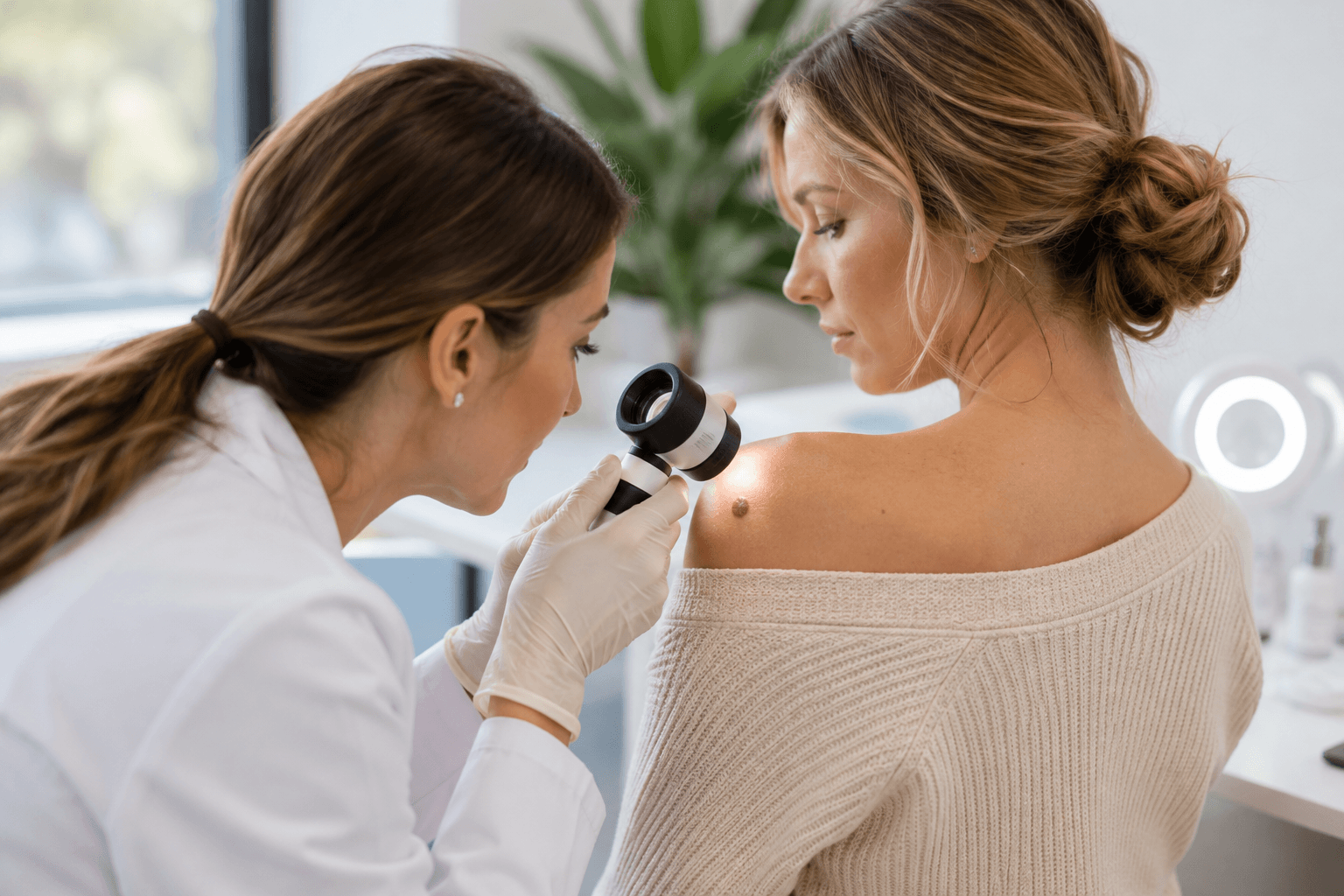
A dermatology visit for a mole concern typically starts with a visual and sometimes dermoscopic examination, where a provider uses a specialized magnifying tool to look at the mole's structure beneath the surface. This helps distinguish between patterns that are typical of benign moles and patterns associated with atypical or cancerous growths. If anything looks uncertain, a biopsy may be recommended, where a small sample of tissue is removed and sent to a lab for analysis. This step is quick and generally done in the same visit.
For patients in Monroe, having this kind of thorough mole checks evaluation done by an experienced dermatology team means concerns get addressed quickly rather than sitting in the back of your mind for months.
How Does Mole Removal Actually Work?
Once a mole is confirmed to need removal, whether for medical reasons or simply because a patient wants it gone, there are a couple of standard approaches.
Shave Removal
For moles that sit close to the surface of the skin, a provider can shave the mole flush with the surrounding skin using a small blade. This method is fast, typically does not require stitches, and leaves minimal scarring.
Excisional Removal
For deeper or more concerning moles, an excisional approach removes the entire growth along with a small margin of surrounding tissue. This method usually requires a few stitches and is often the preferred approach when a biopsy needs to confirm the mole is fully removed.
Both procedures are done under local anesthesia, so discomfort during the process is minimal. Most patients describe the sensation as a slight pressure rather than pain.
What Does Recovery Look Like After Mole Removal?
Healing time depends on the removal method and the location on the body. Shave removals often heal within one to two weeks, while excisional removals can take a bit longer, particularly if stitches are involved. During recovery, keeping the area clean, protected from the sun, and free from unnecessary irritation helps the skin heal cleanly and reduces the chance of noticeable scarring.
Most patients can return to normal activities the same day, with only minor restrictions on activities that would stretch or rub the treated area.
Why Choose a Dermatology Team for Mole Removal in Monroe?
Attempting to remove a mole at home, whether through over-the-counter products or DIY methods, carries real risk. Without a proper evaluation, there is no way to know whether a mole is simply cosmetic or something that needs closer medical attention. A board certified dermatology team can distinguish between the two, remove the mole safely, and send tissue for testing when needed, giving patients real peace of mind instead of guesswork.
Our team offers thorough mole checks and cyst and mole removal services for patients throughout Monroe and the surrounding Georgia communities. If you have noticed a mole that looks different than it used to, or you simply want an existing mole evaluated, our services page outlines everything we offer, and you can request an appointment directly online.
Frequently Asked Questions About Mole Removal
Is mole removal painful? Most patients feel only mild pressure during the procedure since a local anesthetic numbs the area beforehand. Any soreness afterward is generally minor and resolves within a few days.
Will mole removal leave a scar? Some scarring is possible with any skin procedure, but experienced providers take care to minimize this, and most scars fade significantly over time.
How long does it take to get results back if a biopsy is done? Lab results typically take about one to two weeks, and your provider will follow up with you once results are available.
Can a mole grow back after removal? It is uncommon, but in rare cases pigment cells can regenerate in the same area, particularly with shave removal. This is one reason your provider chooses the removal method based on the specific mole.
Is mole removal covered by insurance? When removal is medically necessary, such as for a suspicious or biopsy confirmed mole, insurance often covers the procedure. Purely cosmetic removals may not be covered, so it is worth checking your specific plan or asking our office directly through our insurance information page.
This guide was updated in August 2026 to reflect current dermatology guidance on mole evaluation and removal. If you have a mole that concerns you, do not wait for it to change further. Reach out to our Monroe area team to schedule an evaluation.

.svg)
.svg)