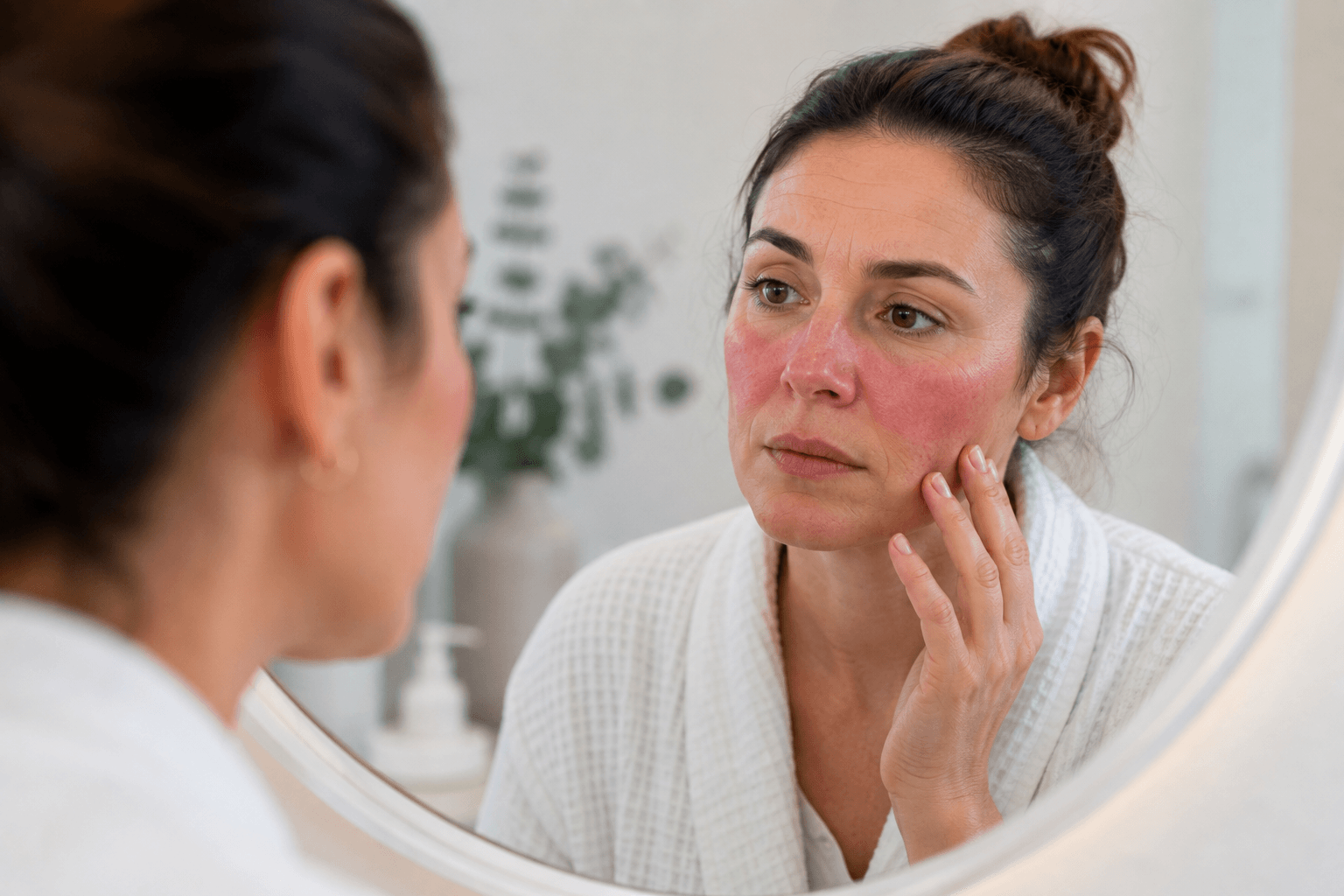
For a lot of people, occasional flushing feels normal, a reaction to heat, exercise, or a glass of wine. But for others, that redness does not fade the way it should. It lingers, spreads, and sometimes brings along visible blood vessels or small bumps that make it look like they are perpetually blushing or sunburned, even on days they have not been in the sun at all. If that sounds familiar, there is a good chance what you are dealing with is rosacea, and it is far more common, and far more manageable, than most people realize.
This article covers what actually causes rosacea, what triggers flare-ups, and how rosacea treatment can help calm persistent redness and restore skin comfort.
What Is Rosacea and Why Does It Happen?
Rosacea is a chronic inflammatory skin condition primarily affecting the face, characterized by persistent redness, visible blood vessels, and in some cases, small red bumps that can resemble acne. It typically develops in adults, often between the ages of thirty and fifty, though it can appear earlier. The exact cause is not fully understood, but researchers believe it involves a combination of blood vessel abnormalities, an overactive immune response, genetic predisposition, and possibly microscopic mites naturally present on the skin that trigger inflammation in some individuals.
Rosacea tends to run in families, and people with fair skin are diagnosed more frequently, though it can affect people of all skin tones. It is important to understand that rosacea is not caused by poor hygiene or anything the person did wrong. It is a legitimate medical condition, and treating it as one rather than trying to scrub it away tends to make a significant difference in outcomes.
What Are the Different Types of Rosacea?
Rosacea does not look the same for everyone, which is part of why it often goes undiagnosed or misdiagnosed for years.
Persistent Redness and Visible Blood Vessels
This is the most common presentation, where the central face stays flushed and small blood vessels become visible near the surface of the skin, particularly on the cheeks and nose.
Bumps and Breakouts
Some patients develop small red bumps or pus filled lesions that resemble acne, which is why this type of rosacea is sometimes mistaken for adult acne and treated incorrectly for years before a proper diagnosis is made.
Thickened Skin
In more advanced cases, particularly around the nose, skin can gradually thicken over time, a condition most often seen in men.
Eye Irritation
Rosacea can also affect the eyes, causing dryness, irritation, redness, and a gritty sensation, a form of the condition that is frequently overlooked entirely.
What Triggers a Rosacea Flare-Up?
Identifying personal triggers is one of the most effective tools for managing rosacea day to day. Common triggers include sun exposure, which is particularly relevant given Georgia's warm climate and strong sun for much of the year, along with spicy foods, alcohol, hot beverages, extreme temperatures, stress, and certain skincare products containing alcohol or fragrance. Intense exercise can also trigger flushing in some patients. Keeping a simple log of flare-ups alongside what you ate, did, or used that day can help identify your specific patterns over time.
How Is Rosacea Diagnosed?
Rosacea is typically diagnosed through a visual skin examination combined with a discussion of your symptoms, flare-up patterns, and family history. There is no single definitive lab test, which makes an experienced dermatologist's evaluation especially valuable, since rosacea can resemble other skin conditions including acne, allergic contact dermatitis, and even lupus in some presentations. Getting an accurate diagnosis early prevents months or years of using the wrong products or treatments that can actually make symptoms worse.
What Rosacea Treatment Options Are Available?
Because rosacea varies so much from person to person, treatment is generally tailored to the specific type and severity a patient is experiencing.
Topical and Oral Medications
Prescription topical treatments can reduce redness and inflammation, while oral medications, often antibiotics used for their anti-inflammatory properties rather than to fight infection, can help manage more persistent or bump-related rosacea.
Laser and Light Therapy
For visible blood vessels and persistent redness, laser treatments using targeted light energy can reduce the appearance of blood vessels and calm overall redness by targeting the underlying vascular component of the condition. Our Cutera laser and light technology is one option used to address this specific concern, offering a more direct approach for patients whose main frustration is visible redness rather than bumps or texture.
Skincare Adjustments
Beyond medical treatment, switching to gentle, fragrance-free skincare products and incorporating daily sun protection plays a significant supporting role in managing flare-ups long term.
How Long Does It Take to See Improvement With Rosacea Treatment?
This varies depending on the treatment approach and the severity of your condition. Topical treatments often show initial improvement within four to eight weeks of consistent use. Laser and light treatments for visible blood vessels typically show progressive improvement over a series of sessions, with results becoming more noticeable after each treatment as the targeted vessels fade. Because rosacea is a chronic condition, ongoing maintenance is usually part of the long-term plan rather than a single fix.
Who Should See a Dermatologist About Rosacea?
If you are dealing with persistent facial redness that does not resolve on its own, visible blood vessels, recurring bumps that do not respond to typical acne treatment, or eye irritation alongside facial redness, it is worth having a dermatologist take a proper look. Early treatment tends to prevent the condition from progressing to more advanced stages, which is part of why addressing it sooner rather than later makes such a difference.
Why Choose a Dermatology Team for Rosacea Treatment in Monroe?
Rosacea can be genuinely frustrating to manage on your own, particularly because so many over-the-counter products marketed for redness or sensitive skin can actually aggravate symptoms further. A dermatology team can accurately diagnose your specific type of rosacea and build a treatment plan that combines medical management with in-office treatments when appropriate, rather than a generic approach that does not address your actual triggers.
Our Monroe area patients can learn more about our rosacea treatment options, explore our laser treatments and service categories, and request an appointment with our team to start building a plan around your skin.
Frequently Asked Questions About Rosacea Treatment
Is rosacea curable? Rosacea is a chronic condition that is not currently curable, but it is very manageable with the right combination of treatment and trigger avoidance, and many patients see significant long-term improvement in their symptoms.
Can diet really affect rosacea flare-ups? Yes, for many patients certain foods and beverages, particularly spicy foods, alcohol, and hot drinks, are common triggers. Identifying your personal triggers through tracking can meaningfully reduce flare-up frequency.
Is rosacea the same as acne? No, though they can look similar and sometimes coexist. Rosacea is a distinct inflammatory condition with its own triggers and treatment approach, which is why an accurate diagnosis matters before starting treatment.
Does sunscreen help with rosacea? Yes, daily sun protection is one of the most important habits for managing rosacea, since sun exposure is one of the most common triggers for flare-ups.
How many laser sessions are typically needed for rosacea related redness? This varies by patient, but most people see a series of sessions spaced several weeks apart to achieve their best results, with visible improvement building progressively after each treatment.
This guide was updated in August 2026 to reflect current rosacea treatment guidance. If persistent redness has been affecting your confidence or comfort, reach out to our Monroe team to schedule a consultation.

.svg)
.svg)