Skin cancer is one of the most common cancers diagnosed in the United States, and it is also one of the most treatable when caught early. That combination makes it particularly important to know what to look for, especially in a place like Georgia, where sun exposure is a near constant part of daily life for much of the year. A lot of people are not entirely sure what they are supposed to be checking for beyond the word mole, and that gap in understanding is exactly what this article aims to close.
Here we will cover the early warning signs of skin cancer, who tends to be at higher risk, and what skin cancer removal actually involves once a diagnosis is confirmed.
What Are the Early Signs of Skin Cancer?
Skin cancer does not always look the way people expect. It is not always a dark, irregular mole. Sometimes it shows up as a new growth that looks pearly or waxy, a flat, scaly patch that will not heal, a sore that bleeds and then reopens, or a spot that itches or feels tender without any clear cause. Basal cell carcinoma, the most common form, often appears as a small, shiny bump that can be mistaken for a pimple that never quite goes away. Squamous cell carcinoma frequently presents as a rough, scaly patch or a firm red nodule. Melanoma, the least common but most serious form, typically follows the ABCDE pattern of asymmetry, irregular borders, uneven color, larger diameter, and evolving appearance.
The common thread across all of these is change. Any spot on your skin that looks different than it did a few months ago, or that simply will not heal the way a normal cut or irritation would, deserves a closer look from a professional.
Who Is Most at Risk for Skin Cancer?
Sun exposure over a lifetime is the single biggest risk factor, which makes Georgia's climate genuinely relevant here rather than incidental. People with fair skin, light eyes, or a tendency to burn rather than tan are at higher risk, as are people with a personal or family history of skin cancer. A history of sunburns, particularly blistering sunburns during childhood, also raises risk significantly, as does regular use of tanning beds. Age plays a role too, since skin cancer risk accumulates over decades of sun exposure, though it is increasingly diagnosed in younger adults as well.
None of this means people outside these risk categories are immune. It simply means these factors should prompt more frequent and more careful skin monitoring.
Why Does Early Detection Matter So Much?
The earlier skin cancer is caught, the less invasive the treatment tends to be and the better the long-term outcome. Basal cell and squamous cell carcinomas, when caught early, are highly treatable and rarely spread beyond the original site. Melanoma is more aggressive and can spread to other parts of the body if left untreated, which is exactly why any changing or unusual mole deserves prompt attention rather than a wait-and-see approach.
What Happens During a Skin Cancer Screening?
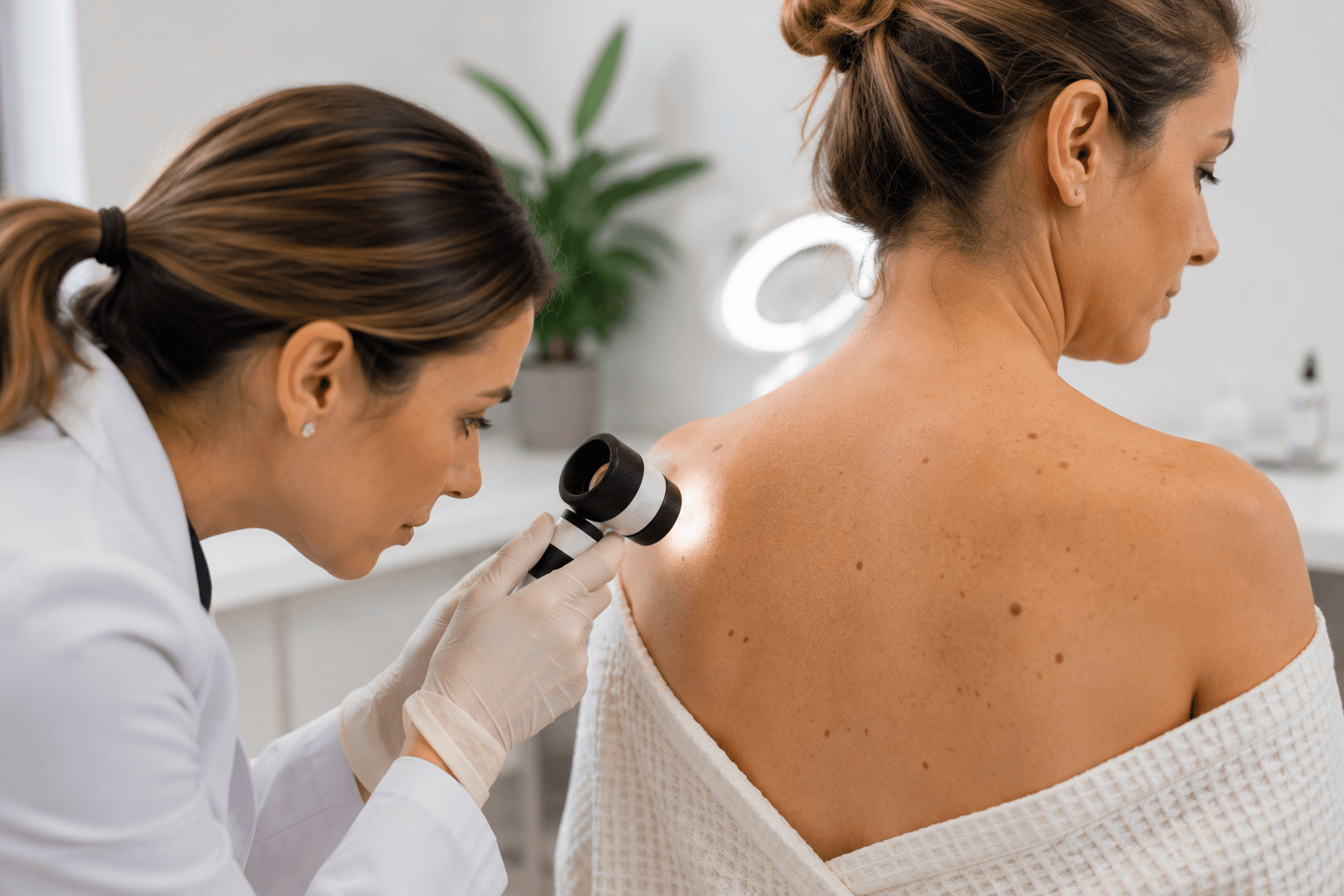
A professional skin cancer screening typically involves a full body visual examination, where a dermatologist checks not just the spots you are already concerned about but the entire surface of your skin, including areas that are hard to see on your own like your back and scalp. Dermoscopy, a magnified imaging technique, is often used to get a closer look at any suspicious areas. If something looks concerning, a biopsy is generally the next step, where a small tissue sample is removed and analyzed in a lab to confirm or rule out cancer.
Regular screenings are especially important for higher risk patients, and many providers recommend an annual full body check even for patients with no current concerns, simply because early detection makes such a meaningful difference in outcomes.
How Does Skin Cancer Removal Work?
Once a diagnosis is confirmed, the appropriate removal method depends on the type, size, and location of the cancer.
Standard Excision
For many basal cell and squamous cell carcinomas, standard surgical excision removes the cancerous tissue along with a margin of healthy skin around it. The tissue is then examined to confirm clear margins, meaning no cancer cells remain at the edges of the removed area.
Mohs Micrographic Surgery
For skin cancers in more sensitive or cosmetically significant areas, such as the face, or for cancers that have recurred or grown larger, Mohs micrographic surgery offers an especially precise approach. During this procedure, thin layers of tissue are removed and examined under a microscope one at a time, with the surgeon continuing only in areas where cancer cells are still present. This allows for the highest possible cure rate while preserving as much healthy surrounding tissue as possible, which matters significantly in areas like the nose, ears, and eyelids where tissue conservation affects both function and appearance.
What Does Recovery Look Like After Skin Cancer Removal?
Recovery time varies depending on the size and location of the removal site and the method used. Smaller excisions often heal within one to two weeks, while larger areas or those requiring reconstruction may take longer. Your provider will give you specific aftercare instructions, which typically include keeping the area clean, protected from sun exposure, and monitored for any signs of infection during healing.
Follow-up appointments after treatment are an important part of the process, both to confirm proper healing and to establish an ongoing monitoring schedule, since patients who have had one skin cancer are at higher risk of developing another.
Why Choose a Dermatology Team for Skin Cancer Removal in Monroe?
Skin cancer treatment benefits enormously from experience, particularly when it comes to techniques like Mohs surgery that require both surgical precision and pathology expertise. A dermatology team that handles skin cancer screening, diagnosis, and removal under one roof means continuity of care from the moment a concern is identified through full recovery and ongoing monitoring.
Our Monroe area patients can learn more about our skin cancer removal and skin cancer screening services, browse our full services page, and request an appointment if you have a spot you would like evaluated.
Frequently Asked Questions About Skin Cancer Removal
Is skin cancer removal painful? The procedure is performed under local anesthesia, so most patients feel only pressure rather than pain during removal. Some soreness during recovery is normal and typically manageable with over-the-counter pain relief.
How do I know if I need Mohs surgery instead of standard excision? This depends on factors like the type of cancer, its size, and its location. Your dermatologist will recommend the most appropriate method based on your specific diagnosis during your evaluation.
Will skin cancer removal leave a scar? Some scarring is possible with any skin procedure, but providers take deliberate steps to minimize this, particularly with techniques like Mohs surgery that are designed to preserve as much healthy tissue as possible.
How often should I get a skin cancer screening? This varies by risk level, but many providers recommend an annual full body screening for most adults, with more frequent checks for patients with a personal or family history of skin cancer.
Can skin cancer come back after removal? It is possible, particularly for certain types or in patients with ongoing sun exposure and risk factors. This is why follow-up monitoring after treatment is such an important part of long-term care.
This guide was updated in August 2026 to reflect current skin cancer screening and treatment guidance. If you have noticed a spot that looks different or will not heal, do not wait to have it checked. Reach out to our Monroe team to schedule an evaluation.

.svg)
.svg)