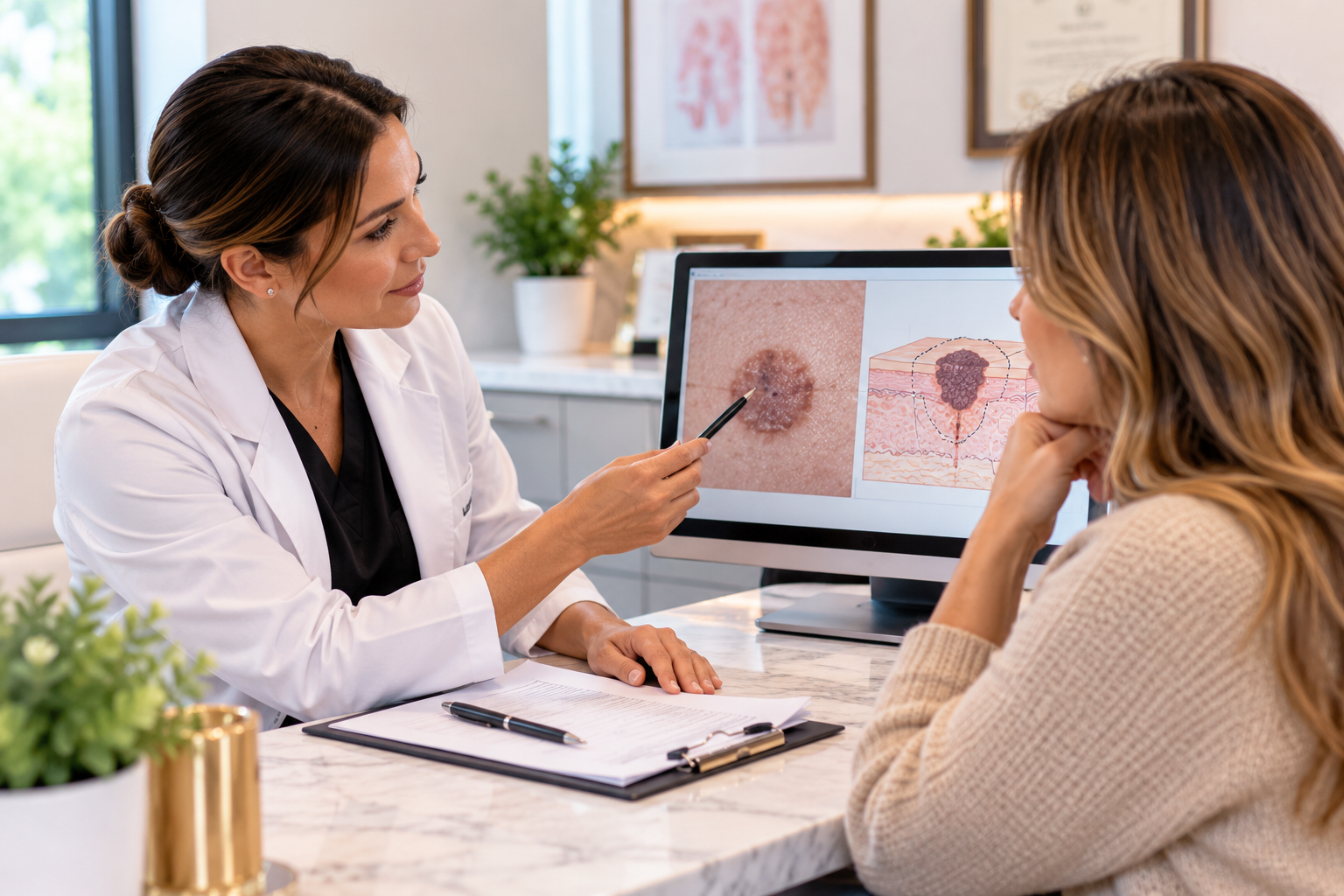
Hearing that a biopsy came back as skin cancer can stop you in your tracks. Take a breath. The most common skin cancers, basal cell carcinoma and squamous cell carcinoma, are highly treatable, especially when they are found early, and removal is often a straightforward outpatient process.
What happens next depends on the type of skin cancer, its size and depth, where it is on your body, and your overall health. In many cases, your dermatologist will recommend surgical removal, either through a standard excision or Mohs micrographic surgery. This guide explains how those options work, how they differ, and what you can expect so you feel prepared rather than anxious.
Dermatology Associates of Georgia provides skin cancer care within a physician-led dermatology practice, from screening to removal and follow-up.
What Does a Skin Cancer Biopsy Result Actually Tell You?
Your biopsy report identifies the type of skin cancer and often includes details that help guide treatment, such as how the cells look under the microscope and how deep they appear to go. Your dermatologist uses this information, along with the tumor's location and your medical history, to recommend the right approach.
The two most common results are:
- Basal cell carcinoma (BCC): The most common form of skin cancer. It tends to grow slowly and rarely spreads, but it can damage surrounding tissue if left untreated.
- Squamous cell carcinoma (SCC): Also common and usually very treatable when caught early. Some SCCs carry a higher risk of growing deeper or spreading, which is why prompt treatment matters.
Melanoma and other less common skin cancers follow their own treatment pathways, and your dermatologist will explain the specific plan if your biopsy shows one of these.
What Are the Main Options for Skin Cancer Removal?
Surgery is a primary treatment for basal cell and squamous cell carcinoma. The practice's skin cancer removal page explains that different surgical techniques may be used depending on the cancer's type, size, and location, with the goal of complete removal while minimizing scarring.
The American Academy of Dermatology (AAD) describes surgical excision as the most common treatment for basal cell carcinoma and notes that many early tumors are cured this way (AAD: Basal Cell Carcinoma Treatment). The AAD also lists other options for select situations, such as electrodesiccation and curettage for small, low-risk tumors, or topical medications and photodynamic therapy for certain superficial cancers. These have specific uses and, according to the AAD, lower cure rates than surgery in many cases, so your dermatologist will explain whether any of them fit your situation.
What is a standard surgical excision?
During an excision, the dermatologist numbs the area, removes the tumor along with a margin of healthy-appearing skin, and closes the wound with stitches. The removed tissue is sent to a lab to confirm that the edges are clear of cancer. For many cancers on the trunk, arms, and legs, this is a reliable and efficient option. The practice notes that simpler procedures may be completed in a single office visit.
What is Mohs micrographic surgery?
Mohs surgery removes skin cancer in thin layers, one at a time. Each layer is examined under a microscope while you wait, and the surgeon continues only until no cancer cells remain. This approach spares as much healthy tissue as possible.
Dermatology Associates of Georgia offers Mohs micrographic surgery for certain skin cancers, particularly in areas where preserving tissue and minimizing scarring matter, such as the face, neck, scalp, ears, and hands. Your care team will let you know where your procedure will take place. The AAD notes that Mohs surgery has the highest cure rate of all treatments for skin cancer and is often used for tumors on the ears, eyelids, nose, hands, or feet, as well as recurrent tumors or those with a higher risk of growing deeper.
Mohs Surgery or Excision: How Do You Know Which Is Right?
Your dermatologist will recommend the surgical approach best suited to your skin cancer based on its type, size, location, and risk of recurrence. While both procedures remove cancerous tissue, they differ in how the tissue is examined and how much healthy skin is preserved.
Standard Excision
Standard excision involves removing the skin cancer along with a margin of surrounding healthy tissue. The removed tissue is then sent to a laboratory to check for cancer cells at the edges.
- Best suited for: Many low-risk skin cancers located on the trunk, arms, or legs.
- Tissue preservation: Removes a predetermined margin of surrounding skin.
- Recovery and procedure time: Often completed in a single, relatively short appointment, although laboratory results may take several days.
Mohs Micrographic Surgery
Mohs surgery removes cancerous tissue in thin layers, with each layer examined under a microscope during the procedure. This allows the surgeon to identify remaining cancer cells while preserving as much healthy tissue as possible.
- Best suited for: Certain skin cancers on the face, ears, scalp, or hands, as well as recurrent or higher-risk tumors.
- Tissue preservation: Removes affected tissue layer by layer, minimizing unnecessary removal of healthy skin.
- Recovery and procedure time: May require several stages during one appointment, depending on how many layers must be examined.
According to the American Academy of Dermatology (AAD), Mohs surgery can be particularly beneficial for certain squamous cell carcinomas involving sensitive areas, tumors with poorly defined borders, or cancers at greater risk of recurrence.
The bottom line: Neither procedure is automatically the right choice for everyone. Your dermatologist will consider the characteristics of your skin cancer and recommend the approach most likely to achieve complete removal while protecting healthy tissue.
How Do Different Patients Experience Skin Cancer Removal?
Skin cancer does not affect everyone the same way, and practical concerns differ from person to person.
Men: paying attention to ears, scalp, and neck
Many men spent years outdoors without consistent sun protection, whether working, coaching, golfing, or doing yard work under the Georgia sun. Areas like the tops of the ears, the scalp (especially with thinning hair), and the back of the neck are frequently overlooked. These are also areas where tissue is thin, and where Mohs surgery may be recommended to preserve as much healthy skin as possible. If you are a man who has put off a skin check, a biopsy result is a good reminder to schedule regular skin cancer screenings going forward.
Busy professionals: planning time without delaying care
When your calendar is full, it is tempting to push treatment back. Try not to. A simple excision may take only one visit, while Mohs surgery can involve several stages over the course of a day, so plan to clear that day if Mohs is recommended. The practice notes that most patients resume normal activities shortly after skin cancer removal, though temporary discomfort, swelling, or scarring may occur, and depending on the location, your provider may advise limiting strenuous exercise or heavy lifting while the wound heals. Ask about the expected timeline at your consultation so you can plan meetings, travel, and workouts around it.
What Is Recovery Like After Skin Cancer Removal?
Recovery depends on the size and location of the area treated. Most people experience mild soreness, swelling, or bruising that improves over several days. You will receive wound care instructions, and the practice also offers after-care resources for patients.
To support healing:
- Keep the area clean and follow dressing instructions carefully
- Protect the healing skin from the sun
- Watch for signs of infection, such as increasing redness, warmth, or drainage, and call your provider if they appear
- Keep follow-up appointments, especially if stitches need removal
The practice notes that more extensive cases may require multiple stages or reconstruction, and your care team will guide you if that applies.
What Comes After Skin Cancer Is Removed?
Having one skin cancer increases the importance of ongoing skin monitoring. Regular follow-up exams help catch any new spots early. Between visits, practice daily sun protection, check your skin regularly, and contact your dermatologist about any new, changing, bleeding, or non-healing spot. If you have moles you are keeping an eye on, the practice also offers mole checks.
For more on squamous cell carcinoma specifically, see our earlier article on skin cancer removal in Decatur for squamous cell carcinoma.
Frequently Asked Questions About Skin Cancer Removal
Is skin cancer removal painful?
The area is numbed with local anesthesia, so most people feel pressure rather than pain during the procedure. Mild soreness afterward is common and usually improves within a few days.
How long does Mohs surgery take?
It varies by the size and location of the cancer. Some cases finish quickly, while others require several stages over one day, since each layer is examined before the next step.
Will skin cancer removal leave a scar?
Any surgery can leave a scar, but techniques are chosen to remove the cancer completely while minimizing scarring. Mohs surgery is often recommended in cosmetically sensitive areas because it preserves healthy tissue.
How soon should I have skin cancer removed after a biopsy?
Your dermatologist will advise on timing based on the type and behavior of the cancer. In general, it is best not to delay recommended treatment, especially for squamous cell carcinoma or melanoma.
Can skin cancer come back after removal?
Recurrence is possible, and having one skin cancer raises your risk of developing another. Regular follow-up skin exams and daily sun protection are important parts of long-term care.
From Diagnosis to Peace of Mind
A skin cancer diagnosis is serious, but it is also very manageable with timely, expert care. Understanding your options, and why one might be recommended over another, can turn a stressful moment into a clear plan.
If you have received a biopsy result or have a spot that concerns you, our team at Dermatology Associates of Georgia in Decatur is here to help. Visit our office at 1951 Clairmont Road, Decatur, GA 30033, call (404) 321-4600, or request an appointment online.


