You've probably felt it before. A new patch of dryness that won't quit, a breakout that showed up out of nowhere at thirty-five, or a mole you swear looks different than it did last summer. You start searching online, scrolling through forums, maybe watching a few videos, and somehow you end up more confused than when you started. This is exactly the moment a skin consultation earns its value. It's not just a formality before a cosmetic treatment. It's the single step that turns guesswork into an actual plan, built around your skin, your history, and your goals.
For residents of Decatur, Georgia, that starting point matters even more. Between the region's humidity, sun exposure that runs nearly year round, and a fast-moving skincare industry full of conflicting advice, having a licensed provider look at your skin in person (or virtually) can save you months of trial and error. This article walks through what a professional skin consultation actually involves, how it differs depending on whether you're dealing with a medical or a cosmetic concern, and why it's the smartest first move no matter what brought you in.
Updated this September 2026, this guide reflects current best practices in dermatology consultations and what patients in the Decatur area can expect when they book one.
What Is a Skin Consultation, Exactly?
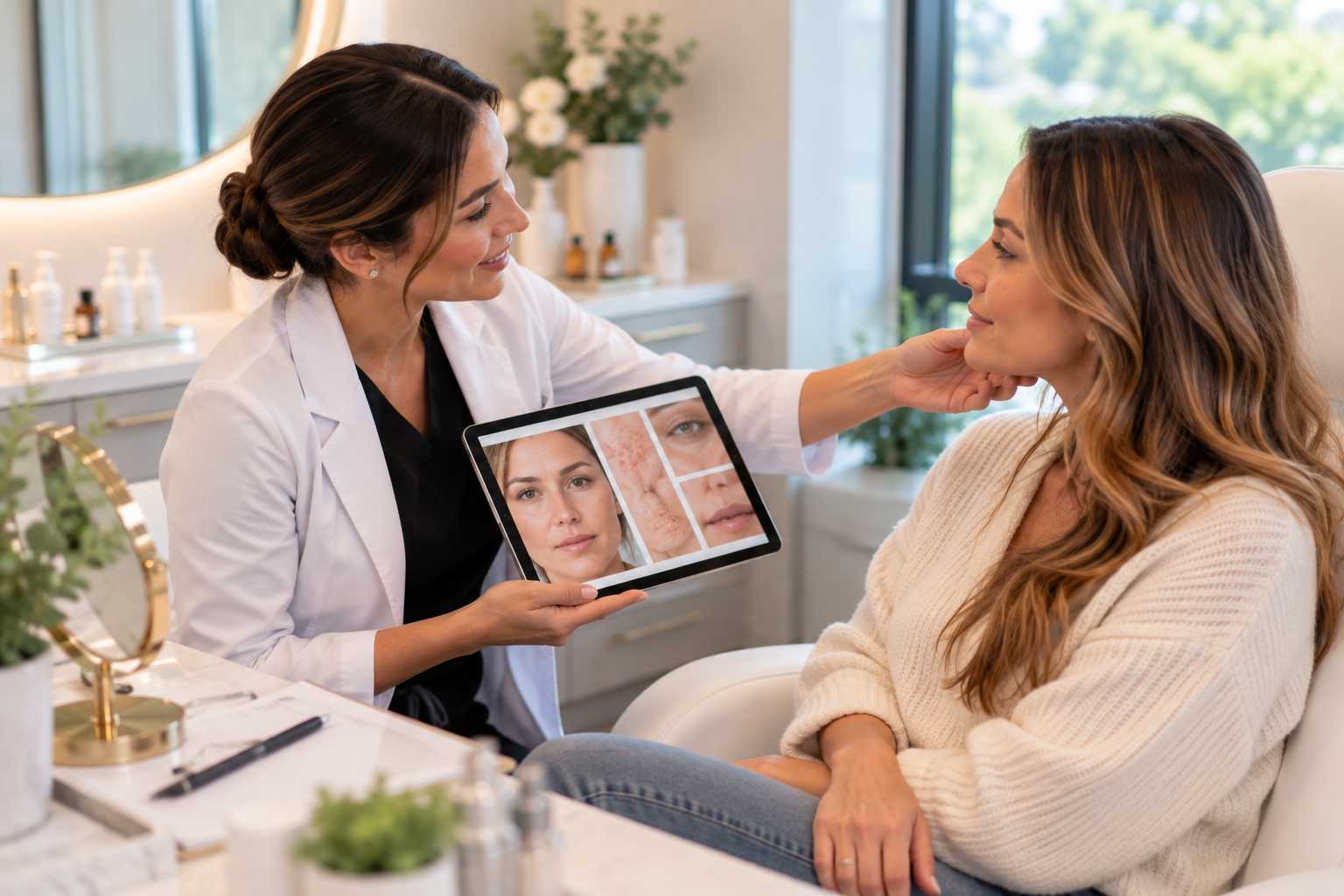
A skin consultation is a one-on-one evaluation where a dermatology provider examines your skin, reviews your history, and helps you understand what's actually going on before recommending next steps. It's less about a quick diagnosis and more about building a clear picture of your skin's specific needs.
During this appointment, a provider typically looks at your skin's texture, tone, and any areas of concern, asks about your medical background, and discusses your goals, whether that's clearing up acne, addressing fine lines, or simply understanding a new spot that appeared. Rather than jumping straight into a treatment, the visit is designed to gather information first. That distinction matters because skin that looks similar on the surface can have very different underlying causes, and the right approach for one person isn't always right for another.
Why Does a Consultation Matter Before Choosing a Treatment?
Skipping a consultation and going straight to a treatment you saw online or heard about from a friend can mean paying for something that was never the right fit for your skin in the first place. A consultation lets a trained provider match the treatment to the actual condition, not just the symptom you noticed.
For example, redness on the cheeks could stem from rosacea, an allergic reaction, sun sensitivity, or something else entirely. Each of those has a different treatment path. A provider trained in medical dermatology can narrow that down through a proper exam rather than a guess. The same logic applies to cosmetic concerns. Someone interested in smoothing fine lines might assume they need one specific injectable, when a provider might suggest a different combination of options entirely once they've evaluated the skin's elasticity, movement patterns, and overall condition. Taking the time to visit the services page beforehand can also help you get a sense of what's available, but the consultation is where those options get personalized to you.
What Should You Bring to Your Skin Consultation?
Coming prepared helps your provider make faster, more accurate recommendations. A short list of medications, products, and questions goes a long way toward a productive first visit.
It helps to bring a list of any medications or supplements you're currently taking, along with the skincare products you use regularly, including anything new you've recently added. If you have a family history of skin cancer or chronic skin conditions like psoriasis or eczema, mention that too, since genetics can play a real role in both risk and treatment response. Many patients also find it useful to jot down a few specific questions ahead of time so nothing gets forgotten once they're in the room. New patients can typically fill out most of the necessary paperwork ahead of time through the practice's patient forms, which helps the actual appointment move more smoothly and leaves more time for the conversation that matters.
How Does a Provider Evaluate Your Skin?
A dermatology provider evaluates skin through a combination of visual examination, patient history, and sometimes closer tools like dermatoscopy for spots or lesions that need a more detailed look. The goal is always to understand both what's visible and what's driving it.
This might include checking skin texture and hydration, looking at pore size and oil production for acne-prone skin, or examining a mole's shape, border, and color if that's the reason for the visit. For patients dealing with a chronic condition like eczema or rosacea, the provider will often ask about flare-up patterns and known triggers, since those details shape a more effective long-term plan rather than a one-time fix. This is also where the credentials behind the provider matter. Decatur patients working with a team of board-certified dermatologists, physician assistants, and licensed aestheticians benefit from evaluations grounded in clinical training rather than trends. You can learn more about the providers behind these evaluations on the about us page.
Medical Dermatology Visit or Cosmetic Consultation: What's the Difference?
A medical dermatology visit focuses on diagnosing and treating a specific skin condition, while a cosmetic consultation centers on aesthetic goals like smoothing, volume, or overall skin appearance. Both start the same way, with a conversation and an exam, but the direction each one takes depends on what you're there for.
Someone coming in for a mole check, a rash that won't clear, or a suspicious growth is generally on the medical side of things, where the priority is identifying and addressing the underlying issue. Someone interested in refining the look of their skin, softening expression lines, or restoring lost volume is typically looking at a cosmetic path. It's worth noting that these two paths sometimes overlap. A patient managing rosacea, for instance, might also be curious about cosmetic options that support their skin's appearance once the underlying condition is under control. A thorough skin consultation helps sort out which category (or combination) actually applies to you, rather than assuming based on symptoms alone.
Can You Do a Skin Consultation Without Visiting the Office?
Yes, many skin concerns can be discussed through a virtual visit, which gives Decatur patients a convenient way to get initial guidance without needing to come into the office right away. It's a practical option for busy schedules or when an in-person visit isn't immediately possible.
Through telemedicine, patients can describe their concerns, show a provider the affected area over video, and get direction on whether an in-office visit is needed or whether the issue can be managed remotely. This tends to work especially well for follow-up questions, minor concerns, or situations where someone just isn't sure if something warrants an in-person appointment. It's not a replacement for a hands-on exam when one is truly needed, particularly for anything involving a mole or lesion that requires closer inspection, but it's a genuinely useful first step for a lot of everyday skin questions.
Why Should Teens and Young Adults Consider a Real Skin Consultation?
Teens and young adults are surrounded by skincare advice from social media, and most of it isn't tailored to their actual skin. A real skin consultation gives them personalized guidance instead of a routine built for someone else's skin type entirely.
It's an easy trap to fall into. A ten-step routine that worked for one influencer's combination skin might be far too harsh for someone with sensitive or acne-prone skin, and a product praised online for "glass skin" results could trigger breakouts or irritation for someone else entirely. Add in the pressure to keep up with whatever's trending, and it's no surprise that a lot of young people end up frustrated, over-exfoliated, or dealing with breakouts that only got worse after trying five different products at once.
A consultation cuts through that noise. A provider can look at what's actually happening with a teen or young adult's skin, whether that's hormonal acne, general sensitivity, or something else, and recommend a routine or treatment that fits their specific situation rather than a trending one. This is especially useful for acne, which remains one of the most common reasons younger patients come in, and one where the right approach often looks nothing like whatever's currently popular online. Getting that clarity early on tends to save both time and frustration, and it builds better skincare habits going into adulthood.
Frequently Asked Questions
How long does a skin consultation take? Most consultations run between twenty and forty minutes, depending on how many concerns are being discussed. Complex cases or first-time visits sometimes take a bit longer to allow for a full history and exam.
Do I need a referral for a skin consultation? It depends on your insurance plan, so it's worth checking your coverage details ahead of time. Reviewing the practice's insurance info page beforehand can help clarify what's needed before you book.
Is a skin consultation the same as a skin cancer screening? Not exactly, though they can overlap. A general consultation may include a look at moles or spots of concern, but a dedicated skin cancer screening is a more focused exam specifically checking for signs of skin cancer.
Can one consultation cover both a medical concern and a cosmetic question? Yes, it's common to bring up both during the same visit. Providers can address a medical issue like acne or rosacea while also discussing cosmetic goals, since the two are often connected.
How do I book a skin consultation in Decatur? You can request an appointment directly through the appointment request page, where you'll select a reason for your visit and preferred timing.
So, Where Does Your Skin Story Go From Here?
Your skin doesn't need a stranger's routine, a guessing game, or another product that promises everything and delivers little. It needs an actual conversation with someone trained to understand what's happening beneath the surface, and a plan built specifically for you. Whether you're dealing with a persistent medical concern, curious about cosmetic options, or just tired of feeling unsure about what your skin actually needs, a skin consultation is where clarity starts.
If you're in the Decatur, Georgia area and ready to stop guessing, visiting dermga.com is a good place to explore your options, browse the full range of services, and take the first step toward a plan that's actually built around you.


