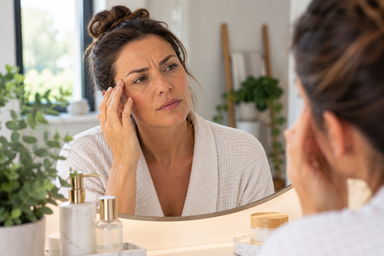
If you've caught yourself staring a little too long in the mirror lately, tracing the lines around your eyes or the crease between your brows, you're not alone. Almost everyone reaches a point where they start asking the same question: is this just aging, or is something else going on, and what actually works to treat it?
Here in Decatur, Georgia, that question comes up a lot, and for good reason. Between the Southern sun, the humidity, and the everyday expressions we make a thousand times a day, our skin works hard. This guide breaks down why wrinkles form, the real difference between the kinds you can prevent and the kinds you can't, and what a wrinkle treatment plan actually looks like when it's built around your skin rather than a one-size-fits-all fix. Updated this September 2026 with the latest guidance from our Decatur dermatology team.
Why Do Wrinkles Form in the First Place?
Wrinkles form when the skin loses its ability to spring back into place, a combination of collagen and elastin breakdown, repeated muscle movement, and outside damage from the sun and environment. It's less about a single cause and more about several factors stacking up over time. Understanding which ones apply to you is the first step toward choosing the right wrinkle treatment approach.
How Does Sun Exposure Speed Up Skin Aging?
Ultraviolet light is one of the biggest accelerants of visible aging, a process dermatologists call photoaging. UV rays break down collagen fibers faster than your body can replace them, and they trigger the kind of free radical damage that leaves skin looking crepey, uneven, and lined well before it "should."
Decatur summers are long, bright, and humid, and even cloudy days here carry meaningful UV exposure. If you spend time outdoors around Oakhurst, the Decatur Square, or walking the Path trails without daily sunscreen, that cumulative exposure adds up over the years, especially on the forehead, around the eyes, and along the neck and chest.
What's the Difference Between Dynamic and Static Wrinkles?
Dynamic wrinkles show up when you make an expression, like the lines that appear when you smile, squint, or raise your eyebrows, while static wrinkles are visible even when your face is completely relaxed. This distinction matters because it often points to which treatment will actually help.
Dynamic wrinkles, like crow's feet or the "elevens" between the brows, are caused by repeated muscle contraction over years. Static wrinkles develop when those same repeated movements, combined with collagen loss, eventually etch a line into the skin permanently, even at rest. Generally speaking, dynamic lines respond well to treatments that relax muscle movement, while static lines often need volume or resurfacing support in addition.
Does Collagen and Elastin Loss Really Matter That Much?
Yes, collagen and elastin loss is one of the most significant contributors to visible aging, and it happens gradually starting in your mid-twenties. Collagen gives skin its structure, elastin gives it bounce, and both decline steadily with age, accelerated by sun exposure, smoking, and poor sleep habits.
By your late thirties or forties, skin has typically lost a noticeable percentage of the collagen it had a decade earlier. That loss shows up as thinner skin, more visible lines, and a face that looks "tired" even after a full night's rest.
Can Sleep Position, Smoking, or Dehydration Cause Wrinkles Too?
Yes. Sleep position, smoking, and chronic dehydration are all well-documented contributors to premature wrinkling, separate from sun exposure and natural aging. Side and stomach sleeping press the same areas of the face into a pillow night after night, which over time can create sleep lines that eventually become permanent.
Smoking narrows blood vessels and reduces circulation to the skin, starving it of oxygen and nutrients while also breaking down collagen directly. Dehydration, meanwhile, makes fine lines more visible immediately, since skin that lacks moisture shows texture and creasing more prominently, even if it isn't causing deeper structural aging on its own.
Can Wrinkles Be Prevented, or Just Treated?
Some wrinkle formation can be slowed or delayed through prevention, but once collagen and elastin have broken down and lines have set in, prevention alone usually isn't enough to reverse them. The most realistic approach combines daily prevention habits with professional treatment when lines have already started to bother you.
What Prevention Actually Works?
Daily broad-spectrum sunscreen is, without question, the single most effective prevention tool available, followed by not smoking, staying hydrated, and using a consistent skincare routine that supports the skin barrier. None of these will erase existing wrinkles, but they meaningfully slow the formation of new ones.
For Decatur residents, that means sunscreen even on overcast days, reapplication if you're outside for extended periods, and a bit of extra attention to the neck and chest, areas people often forget.
When Does At-Home Skincare Stop Being Enough?
At-home skincare tends to plateau once wrinkles are visible at rest (static wrinkles) or once dynamic lines have become deeply etched from years of repeated movement. At that point, topical products can improve texture and hydration, but they generally can't relax muscle movement or restore lost volume the way an in-office treatment can.
This is usually the point where people start researching professional options, and it's a good time to have an actual conversation with a dermatology provider rather than guessing based on what's trending online.
What Professional Wrinkle Treatments Actually Work?
Professional wrinkle treatment options generally fall into three categories: treatments that relax muscle movement, treatments that restore lost volume, and treatments that improve skin texture and stimulate collagen. Most effective plans combine more than one, depending on which type of wrinkle you're dealing with.
How Does Botox Treat Wrinkles?
Botox Cosmetic works by temporarily relaxing the specific facial muscles responsible for dynamic wrinkles, softening lines like crow's feet, forehead creases, and the vertical lines between the brows. Because it targets muscle movement rather than volume, it's most effective on expression-driven lines rather than static ones caused primarily by lost structure.
Our Decatur team uses Botox Cosmetic as a foundational option for patients who want a natural, non-surgical way to soften expression lines without changing how their face moves overall. Results typically develop over several days and are temporary, which is part of why it remains such an accessible entry point into professional wrinkle treatment.
How Do Fillers Address Volume Loss?
Facial fillers restore lost volume and support areas where collagen breakdown has caused hollowing or deeper static lines, particularly around the cheeks, nasolabial folds, and lips. Unlike Botox, fillers add structure rather than relaxing movement, which makes them a better fit for wrinkles that remain visible even when your face is at rest.
Facial fillers are often paired with Botox for patients dealing with both dynamic and static concerns at once, since addressing volume and movement together tends to create a more balanced, natural-looking result than treating either alone.
What About Skin Texture, Not Just Lines?
Improving overall skin texture, tone, and firmness typically requires treatments that stimulate the skin's own collagen production rather than simply relaxing muscles or adding volume. This is where laser-based options come in.
Laser treatments can support collagen remodeling and improve surface texture, sun damage, and fine lines, making them a useful complement to Botox and fillers for patients who want more comprehensive rejuvenation. For a broader, whole-face and body approach, our face and body rejuvenation services combine several of these strategies based on individual skin goals.
Should People in Their 20s and 30s Really Be Getting "Preventative Botox"?
Preventative Botox, sometimes called "baby Botox," has become popular among people in their twenties and early thirties, largely driven by social media, but it's not automatically necessary or right for everyone in that age group. It can be a reasonable option for some patients with early, visible dynamic lines, but it should never be treated as a default step just because it's trending.
Social media has made this trend feel almost universal, with influencers framing early Botox as essential maintenance. The reality your Decatur provider will actually walk you through is more nuanced. If you're in your twenties and don't yet have visible lines at rest, there's rarely a medical reason to rush into treatment. If you do have early dynamic lines that bother you, particularly forehead lines or crow's feet that show up in photos, a conservative, lower-dose approach can be appropriate and is generally very safe when done by an experienced provider.
What matters more than age is realistic expectations. Preventative treatment can soften the rate at which certain dynamic lines deepen, but it isn't a substitute for sunscreen, hydration, and healthy habits, and it isn't a guarantee that you'll never develop static wrinkles later. A good provider will tell you honestly whether treatment makes sense for your skin right now, or whether you'd be better served waiting and focusing on prevention first. If you're curious where you stand, our team can walk you through what's actually appropriate for your face rather than following a trend.
Frequently Asked Questions
What is the most effective wrinkle treatment for someone in their 40s or 50s? It depends on whether your lines are mostly dynamic or static. Many patients in this age range do best with a combination of Botox for expression lines and fillers or laser treatments to address volume loss and texture.
Is wrinkle treatment only for older adults? No. While most patients seeking treatment are in their late thirties and beyond, some younger adults with early dynamic lines choose conservative preventative treatment, though it isn't necessary for everyone.
How long do results from Botox or fillers typically last? Botox generally lasts a few months before muscle movement gradually returns, while fillers can last anywhere from several months to over a year depending on the product and treatment area.
Can I prevent wrinkles with skincare alone? Skincare and daily sunscreen use can meaningfully slow new wrinkle formation, but once lines are established, especially static ones, professional treatment is usually needed to see real improvement.
Does living in Decatur's climate make wrinkles worse? Georgia's high UV index and humidity contribute to photoaging over time, which is why consistent sun protection matters year round, not just in summer.
Smoothing Things Out: Your Next Move
Wrinkles aren't a sign that something's wrong with you, they're a sign that skin has been doing its job for years, absorbing sun, expression, and everyday life. The good news is that you don't have to choose between doing nothing and doing everything. Whether you're just noticing your first fine lines or you're ready to talk about a real treatment plan, understanding the "why" behind your skin's changes makes the "what now" a lot easier to figure out.
If you're in Decatur and want a straightforward, honest read on what would actually help your skin, our team is happy to talk through your options. You can learn more about our full range of services on our services page, get to know our providers on our about us page, or go ahead and request an appointment to start the conversation. You can also visit our homepage to see everything our Decatur practice offers.

.svg)
.svg)