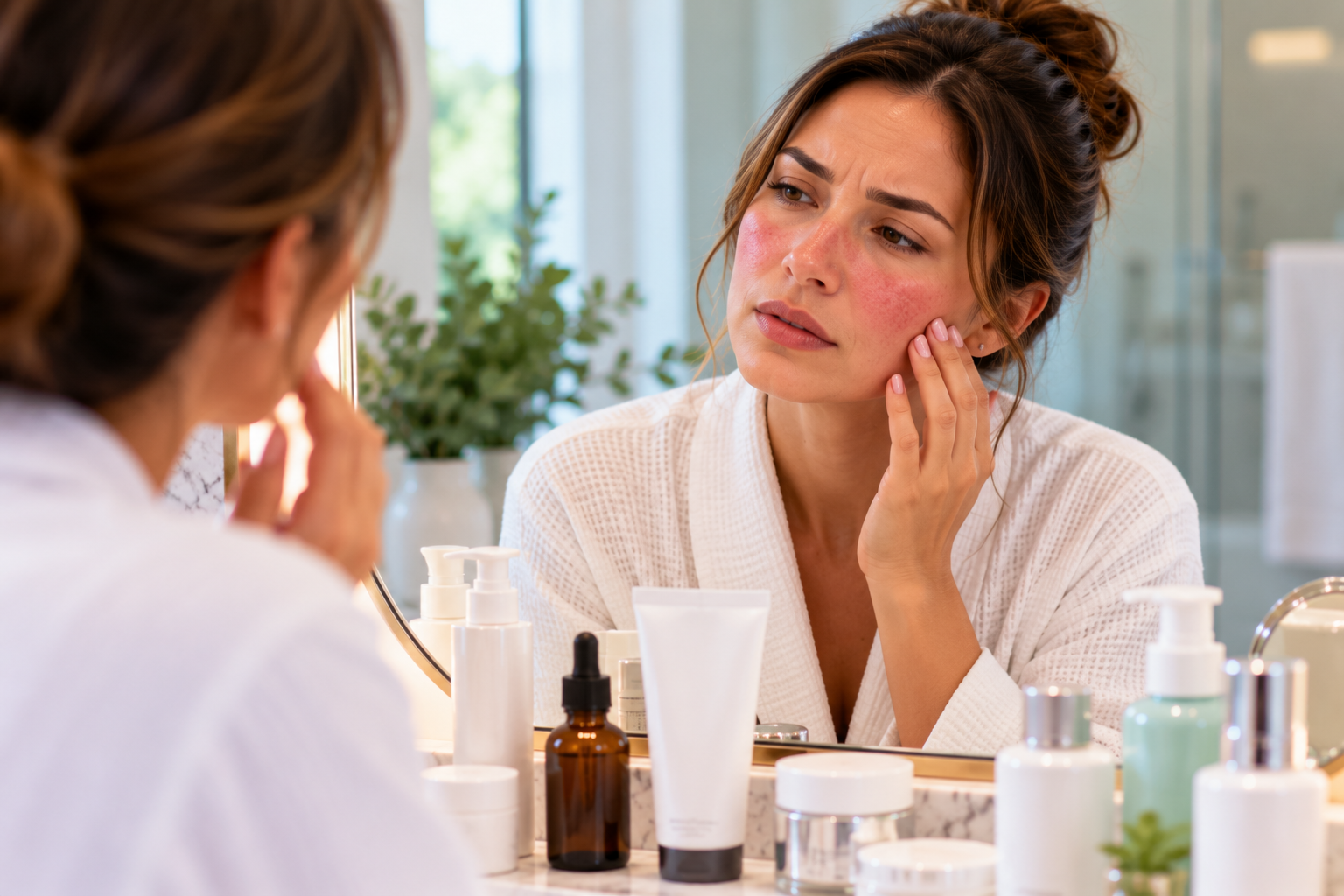
You bought the serum everyone is talking about, layered a toner, an exfoliant, and a moisturizer, and woke up redder than before. If your face stings, burns, or flushes after skincare, your routine may be working against you.
For people with rosacea, many popular products can trigger irritation and flares. Ingredients such as alcohol, fragrance, menthol, and certain acids are common culprits, and habits like scrubbing or using toners can make sensitive skin worse. The good news is that a simpler, gentler routine, paired with professional rosacea treatment, can make a real difference in how your skin looks and feels.
At Dermatology Associates of Georgia, rosacea is managed as a chronic medical skin condition by a physician-led dermatology team, with plans tailored to your specific symptoms.
What Is Rosacea, and Why Is the Skin So Reactive?
Rosacea is a chronic inflammatory skin condition that commonly causes persistent facial redness, flushing, visible blood vessels, and sometimes pimple-like bumps and swelling. The practice's rosacea page notes that it usually affects the central face, including the cheeks, nose, chin, and forehead, and can sometimes extend to the neck, chest, and back.
Rosacea-prone skin tends to be sensitive, so products and habits that seem harmless for others can sting, burn, or spark a flare. Because symptoms can resemble acne or other conditions, a proper diagnosis matters. Our article on how to tell the difference between rosacea and acne explains why the two are often confused.
Which Skincare Ingredients Can Make Rosacea Worse?
Several common ingredients are known to irritate rosacea-prone skin. The American Academy of Dermatology (AAD) recommends avoiding products that contain the following (AAD: Rosacea Skin Care Tips):
- Alcohol
- Camphor
- Fragrance
- Glycolic acid
- Lactic acid
- Menthol
- Sodium lauryl sulfate, which is common in some cleansers, shampoos, and toothpastes
- Urea
The AAD also advises never using an astringent or toner and choosing fragrance-free products rather than ones labeled "unscented," which may still contain masking fragrances.
What about exfoliating?
Exfoliation is a staple of many routines, but the AAD advises people with rosacea to stop exfoliating and to avoid rubbing, scrubbing, or massaging the face. Washcloths and facial sponges can also irritate, so use your fingertips instead.
What Does a Rosacea-Friendly Skincare Routine Look Like?
A rosacea-friendly routine is usually short and gentle: a mild cleanser, a moisturizer, and daily sun protection. Here is a simple framework based on AAD guidance.
- Cleanse gently twice a day. Use a mild, rosacea-friendly cleanser rather than soap, apply with your fingertips, rinse with lukewarm water, and pat dry with a clean cotton towel.
- Apply any prescribed medication first. If your dermatologist prescribes a topical treatment, apply it before your moisturizer.
- Moisturize, even if your skin is oily. Wait for your face to dry after washing, then apply a moisturizer. Creams designed for sensitive skin are often better tolerated than gels or lotions.
- Protect your skin from the sun every day. Use a broad-spectrum, water-resistant sunscreen with SPF 30 or higher. If sunscreen stings, the AAD suggests a mineral formula with zinc oxide or titanium dioxide, or a silicone-based option.
- Test new products before using them on your face. Introduce one new product at a time so you can identify what your skin tolerates.
Sun protection matters year-round in Decatur. The AAD notes that sun exposure is one of the most common rosacea triggers, and Georgia's long, bright seasons make daily sunscreen, shade, and a wide-brim hat especially worthwhile.
Could Something Other Than Skincare Be Triggering Your Flares?
Products are only one piece of the puzzle. The AAD lists other common rosacea triggers, including sunlight, heat, stress, exercise, wind and cold, spicy foods, alcohol (especially red wine), some makeup, hair care products like hairspray, and certain medicines (AAD: Finding Your Rosacea Triggers).
In Decatur, that can mean summer heat on a walk around the Square, a hard workout, a stressful week, or a chilly, windy morning in January. Because triggers vary from person to person, the AAD suggests keeping a simple diary for a few weeks. Note what you ate and drank, which products you used, how much time you spent in heat, cold, or sun, and how your skin responded. Patterns often appear faster than you expect, and that information is valuable to bring to your dermatology appointment.
How Do Different Lifestyles Affect Rosacea and Skincare Choices?
Rosacea shows up differently in different lives, and the products you reach for often depend on your age, routine, and grooming habits.
Gen Z and younger adults: when trends meet sensitive skin
Social media has made multi-step routines, strong acids, and at-home peels feel like the norm. For younger adults with rosacea, that trend can backfire. If your skin flushes, stings, or breaks out in small red bumps after trying something new, consider pausing active ingredients and simplifying. A routine with three gentle steps is often more effective for reactive skin than one with ten. If you are unsure whether you are dealing with rosacea, acne, or irritation, an evaluation can save months of trial and error.
Women: makeup that calms instead of aggravates
Many women use makeup to minimize redness, which is completely reasonable. The AAD notes that a green-tinted concealer can help camouflage redness, and that water-based or powder makeup tends to be less irritating. Look for fragrance-free formulas and remove makeup gently at night without scrubbing.
Men: rethinking aftershave and grooming products
Men often overlook grooming products as a rosacea trigger. Many aftershaves and splash-on toners contain alcohol and fragrance, both of which the AAD lists among ingredients to avoid. Switching to fragrance-free, alcohol-free products and following shaving with a gentle moisturizer may help reduce stinging and redness.
When Is It Time to See a Dermatologist About Rosacea?
Skincare changes help, but they are only part of rosacea management. It may be time for professional rosacea treatment if:
- Redness or flushing persists despite a gentle routine
- You notice bumps, visible blood vessels, or skin thickening
- Your eyes feel gritty, irritated, or look red
- Rosacea is affecting your confidence or daily life
The AAD explains that a dermatologist can tailor a treatment plan that combines trigger management, gentle skin care, sun protection, and, when appropriate, prescription medication or light-based therapy (AAD: Rosacea Diagnosis and Treatment). The AAD also notes that topical treatments for bumps may take several weeks to show improvement, with a noticeable difference often taking two to three months, so patience and consistency matter.
How Does Dermatology Associates of Georgia Approach Rosacea Treatment?
Rosacea care at Dermatology Associates of Georgia starts with an accurate diagnosis and a personalized plan. Treatment is tailored to your specific symptoms and may take some time to fine-tune. Rosacea treatment is also listed among the practice's laser and light therapy services, and your provider can discuss whether that approach is appropriate for your skin.
For established patients managing ongoing concerns, the practice also offers telemedicine visits for non-procedural concerns, which can be convenient for follow-up conversations. Your provider will let you know whether a virtual visit is appropriate for your needs.
If you are curious about how everyday habits affect your skin more broadly, our guide to skin care practices that actually work in Decatur is a helpful companion read.
Frequently Asked Questions About Rosacea and Skincare
Can skincare products cause rosacea?
Skincare products do not cause rosacea, but certain ingredients and habits can trigger flares or worsen symptoms in people who have it. Common irritants include alcohol, fragrance, menthol, and some acids.
Is retinol safe for rosacea?
Some people with rosacea find retinoids irritating. Because tolerance varies, it is best to ask your dermatologist before adding retinol or other active ingredients to your routine.
What kind of sunscreen is best for rosacea?
The AAD recommends broad-spectrum, water-resistant sunscreen with SPF 30 or higher. If sunscreen stings, a mineral formula with zinc oxide or titanium dioxide, or a silicone-based, fragrance-free product, may be better tolerated.
Should I moisturize if I have oily skin and rosacea?
Yes. The AAD recommends moisturizing whether your skin is dry or oily, since moisturizer can help reduce irritation and support the skin barrier.
Can rosacea treatment get rid of redness permanently?
Rosacea is a chronic condition, but symptoms can often be controlled. Ongoing skin care, sun protection, trigger management, and professional rosacea treatment work together to help keep flares in check.
Less Is More, and Calm Is the Goal
When it comes to rosacea, the most effective routine is often the simplest one. Gentle cleansing, steady moisture, daily sun protection, and fewer irritating ingredients can quiet your skin, especially when paired with a plan from a dermatology team.
If you are ready for clarity and relief, our team at Dermatology Associates of Georgia in Decatur is here to help. Visit us at 1951 Clairmont Road, Decatur, GA 30033, call (404) 321-4600, or request an appointment online.


